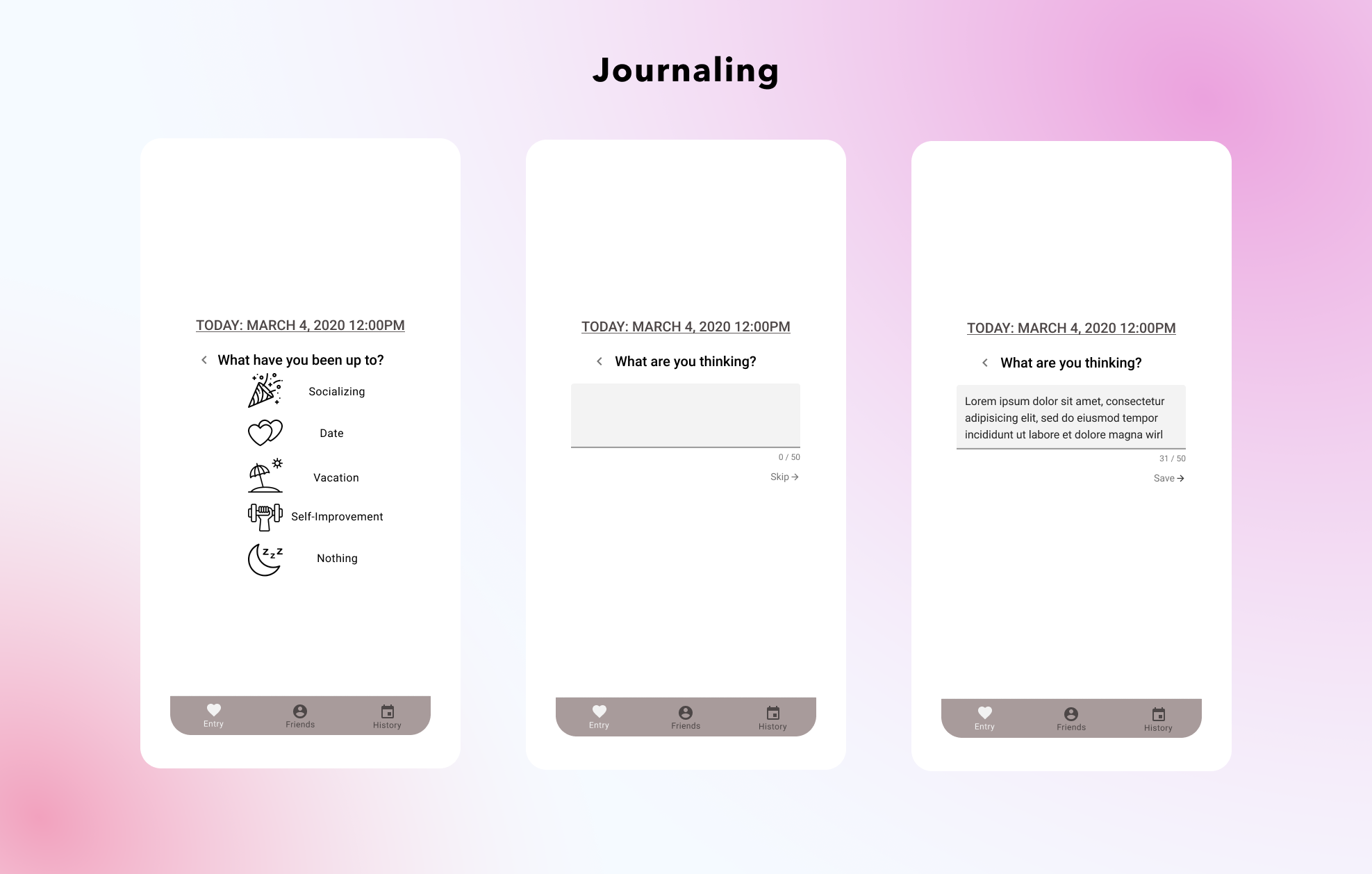
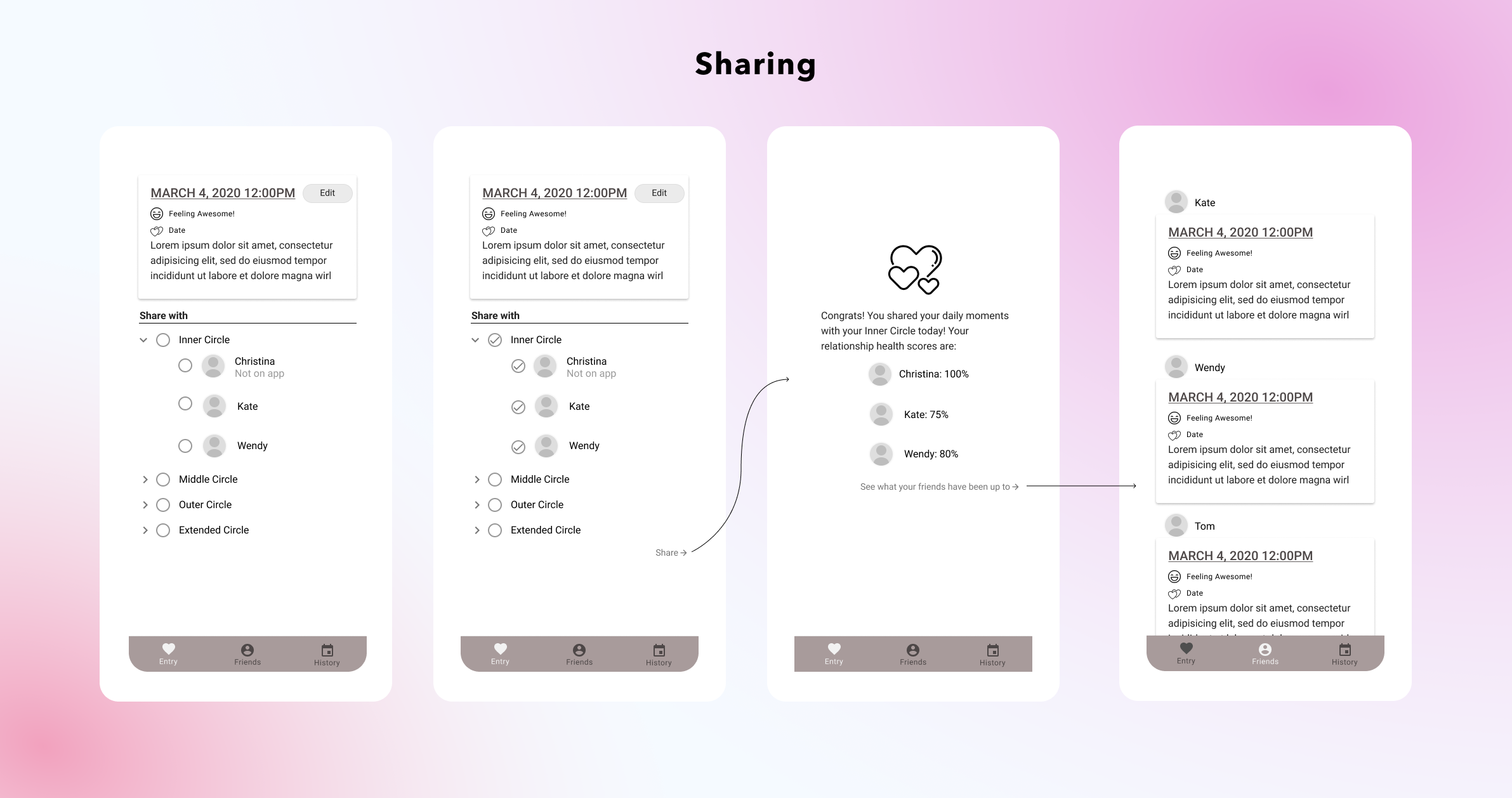
I began with a shared journal for long-distance friends. Interviews and a first walkthrough showed that writing an update still felt like work, so I changed direction to short video calls.
Project details
ROLEProduct designer · solo
PROJECTPersonal project
TIMELINE1 month · March 2020
TOOLSFigma · Whimsical · Miro
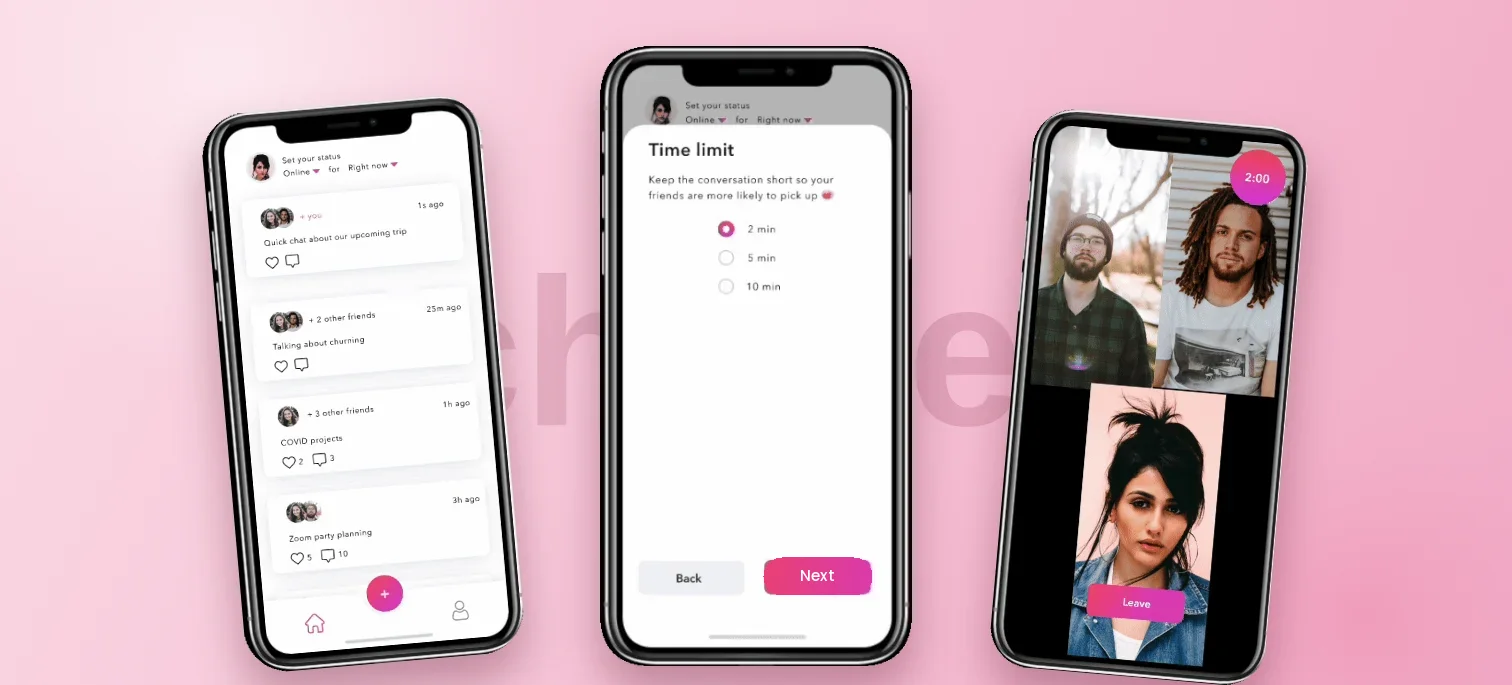
What it isShort video rooms with friends: choose a topic and time limit, then save the call details to a shared feed.
What changedFive people walked through the journal. No one said they would use it; two described writing an update as a burden. I returned to the interview notes and changed direction.
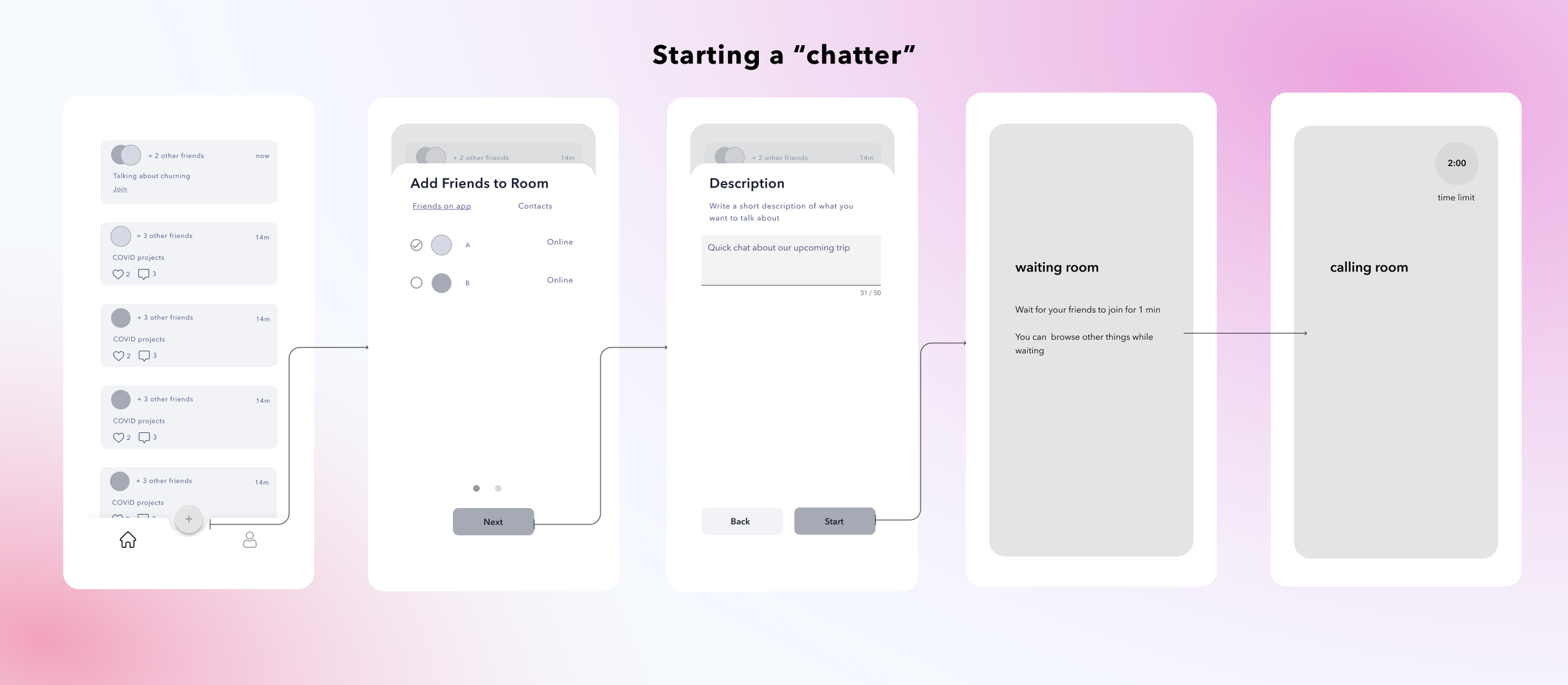
InteractionCallers choose a topic and time limit, then invite friends.
I conducted eight discovery interviews. Five of those same people later walked through the journal in Figma Mirror; a second walkthrough explored the short-call direction.
THE SHAPE OF THE PROJECTMARCH 2020
8
DISCOVERY INTERVIEWS
5
JOURNAL WALKTHROUGHS
2
DIRECTIONS EXPLORED
KEEPING IN TOUCH WITHOUT A LONG UPDATE
In March 2020, I wanted to help friends stay in touch without turning every catch-up into a long call or another written update.
WAS IT THE CALL, OR THE SETUP?
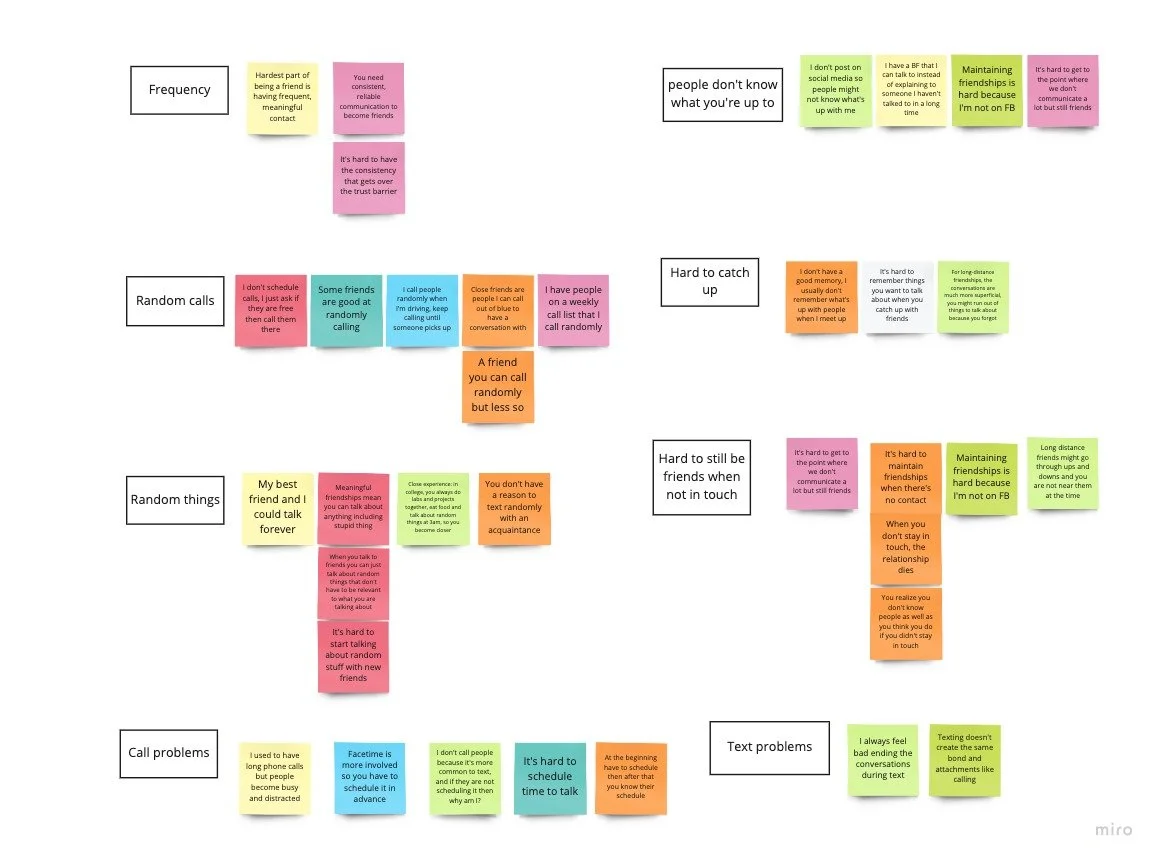
I interviewed eight people about keeping in touch with friends, then grouped the notes in an affinity map. People described calls as richer conversations that required less effort to compose than text. I returned to those themes when the journal direction fell short.
Affinity map from eight interviews
ONE BUSY FRIEND, MANY PEOPLE TO UPDATE
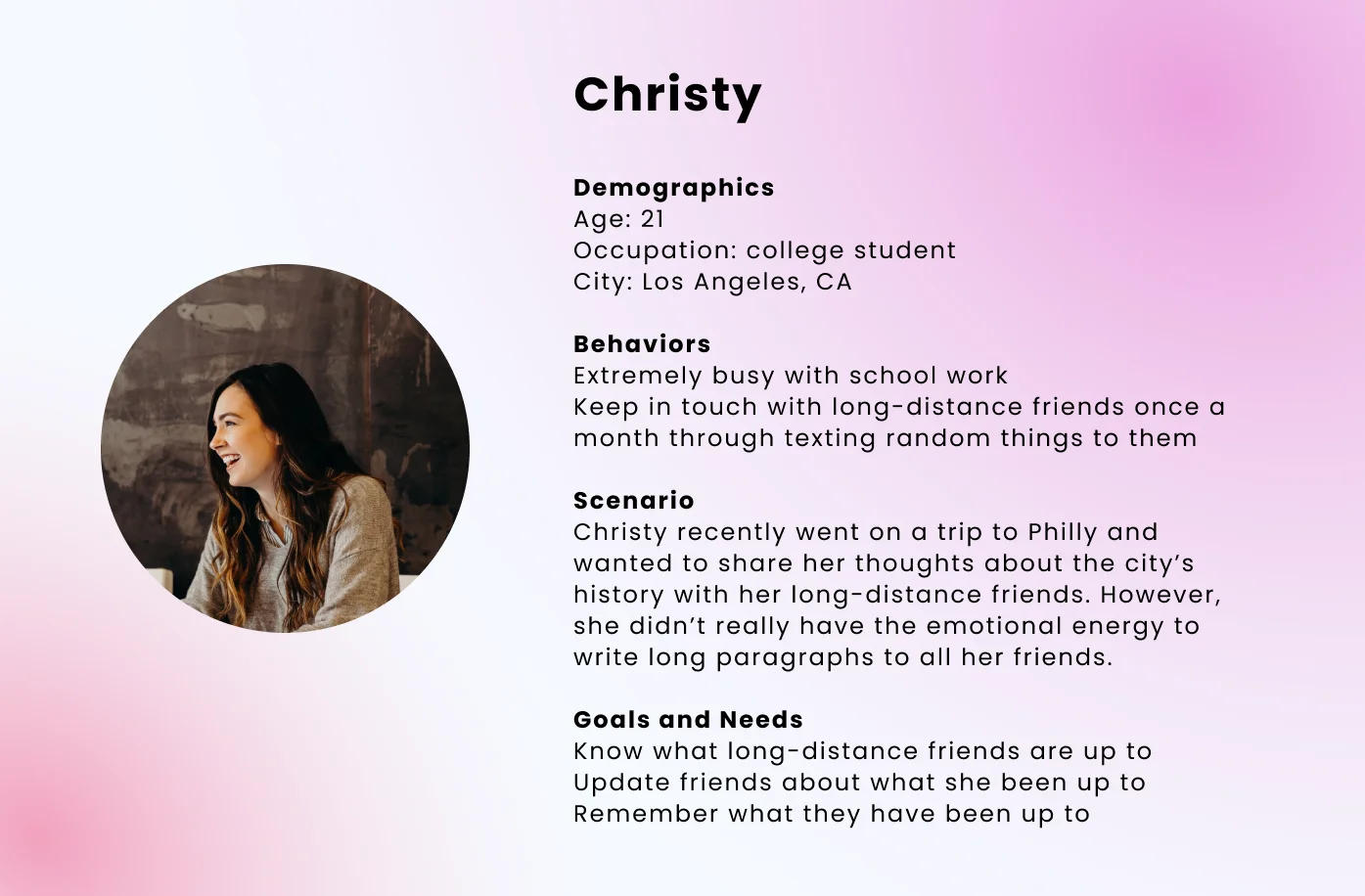
Christy gave me a situation to design around: a busy student trying to keep up with friends in different places.
Christy: planning persona
“How might we redesign texting and calling to fit long-distance friendships?”
THE HMW BEHIND BOTH IDEAS
FIRST TRY: A SHARED JOURNAL
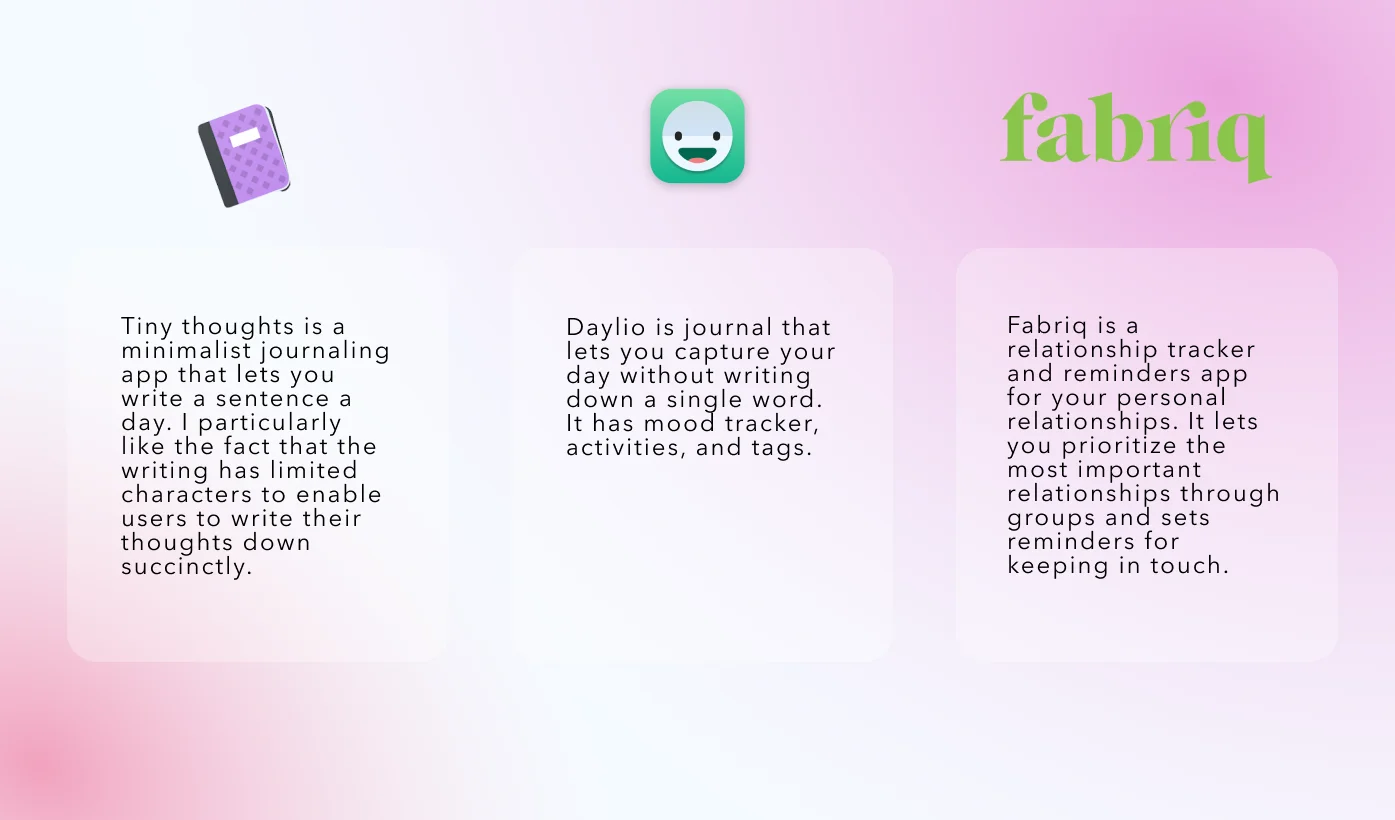
My first idea was a private journal shared with selected friend groups. One update could reach everyone, and nobody had to reply. I borrowed low-effort entry patterns from Tiny Thoughts and Daylio, then added group sharing and reminders for friends someone had not contacted lately.
Journal references: Tiny Thoughts, Daylio, and Fabriq
THE JOURNAL DID NOT LAND
I walked five of the original eight interviewees through the journal using Figma Mirror. No one said they would use it. Two specifically described writing an update as a burden.
I went back to the affinity map. The interviews had pointed toward richer conversations with less effort spent composing a message. I had made writing more organized without removing that effort. That led me to try short calls.
SECOND TRY: SHORT CALLS
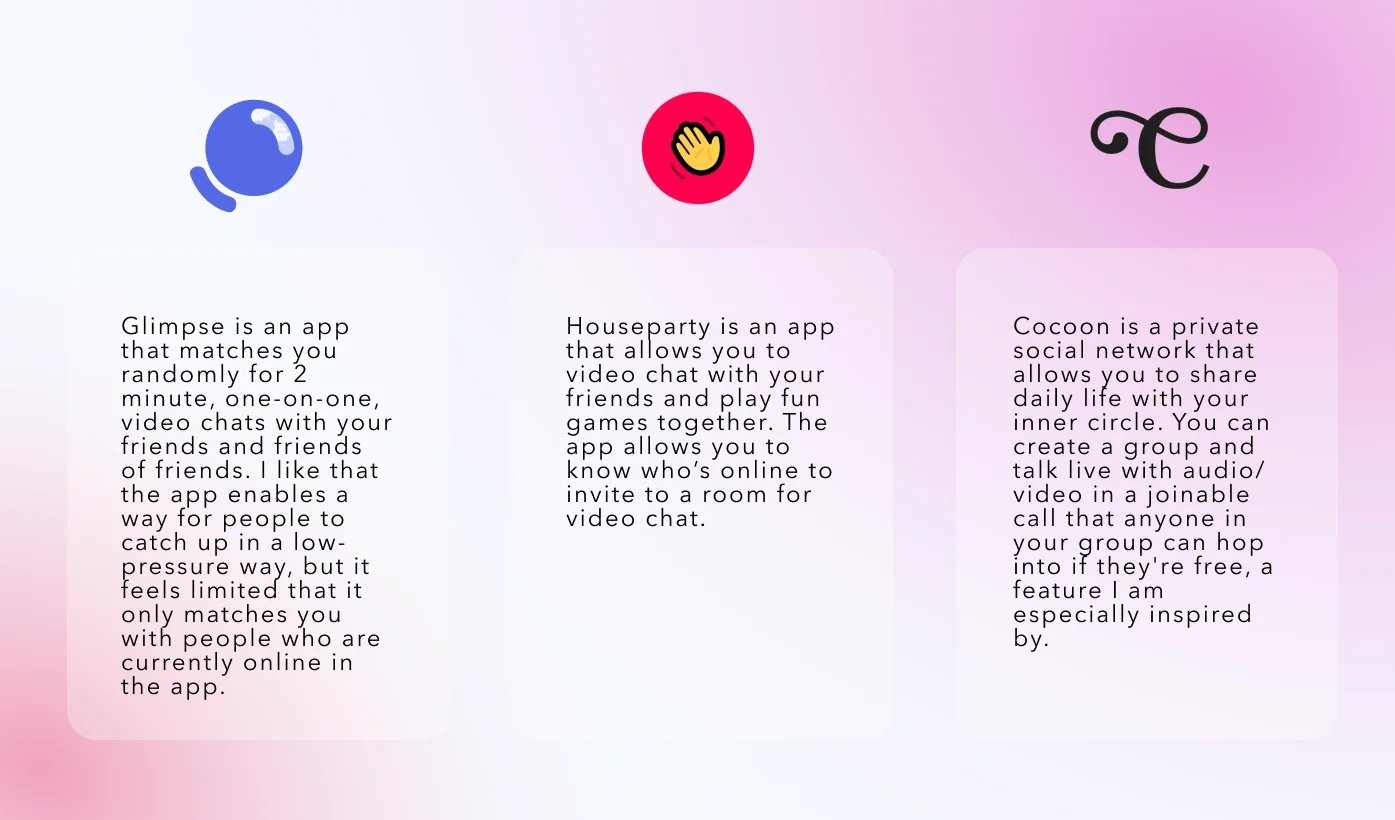
I looked at Glimpse’s short calls and Houseparty’s drop-in rooms, then adapted those ideas for existing friends. The original Chatter screens let the caller choose a topic and time limit.
Start a chatter: open a room with a topic and a caller-selected time limit
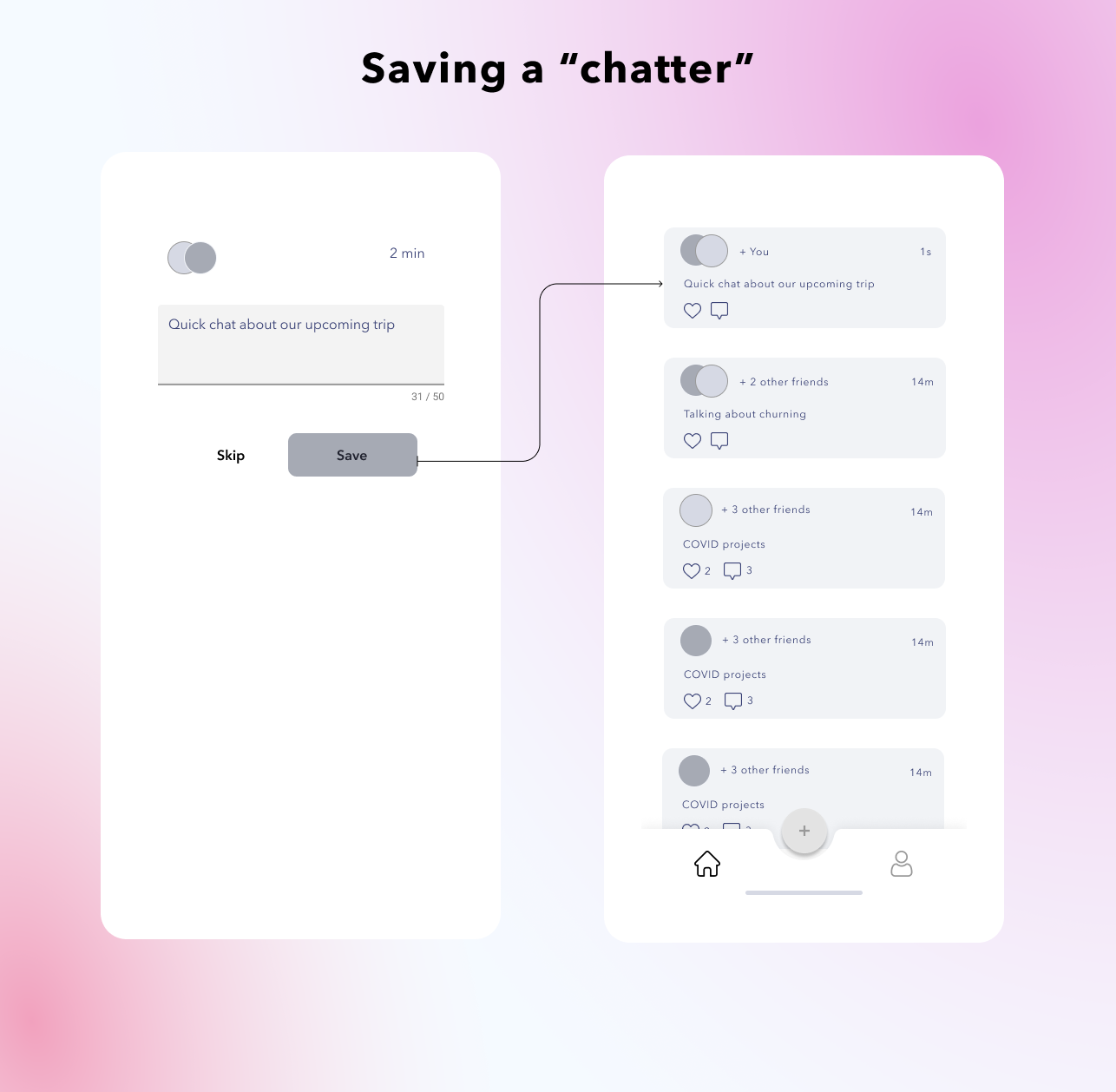
Save a chatter: post the call details to your feed, without recording the call
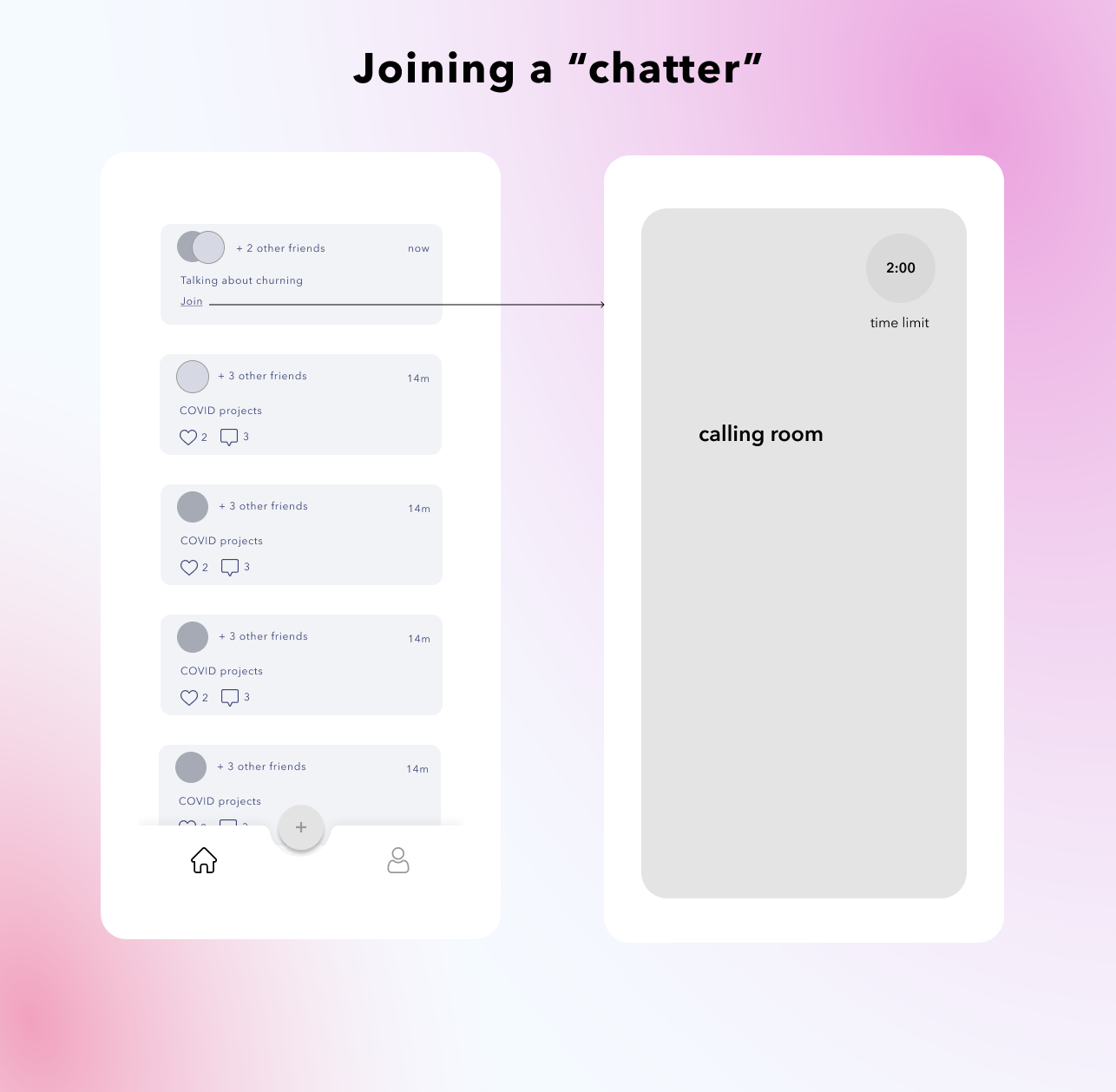
Join a chatter: hop into a friend's live room from the feed
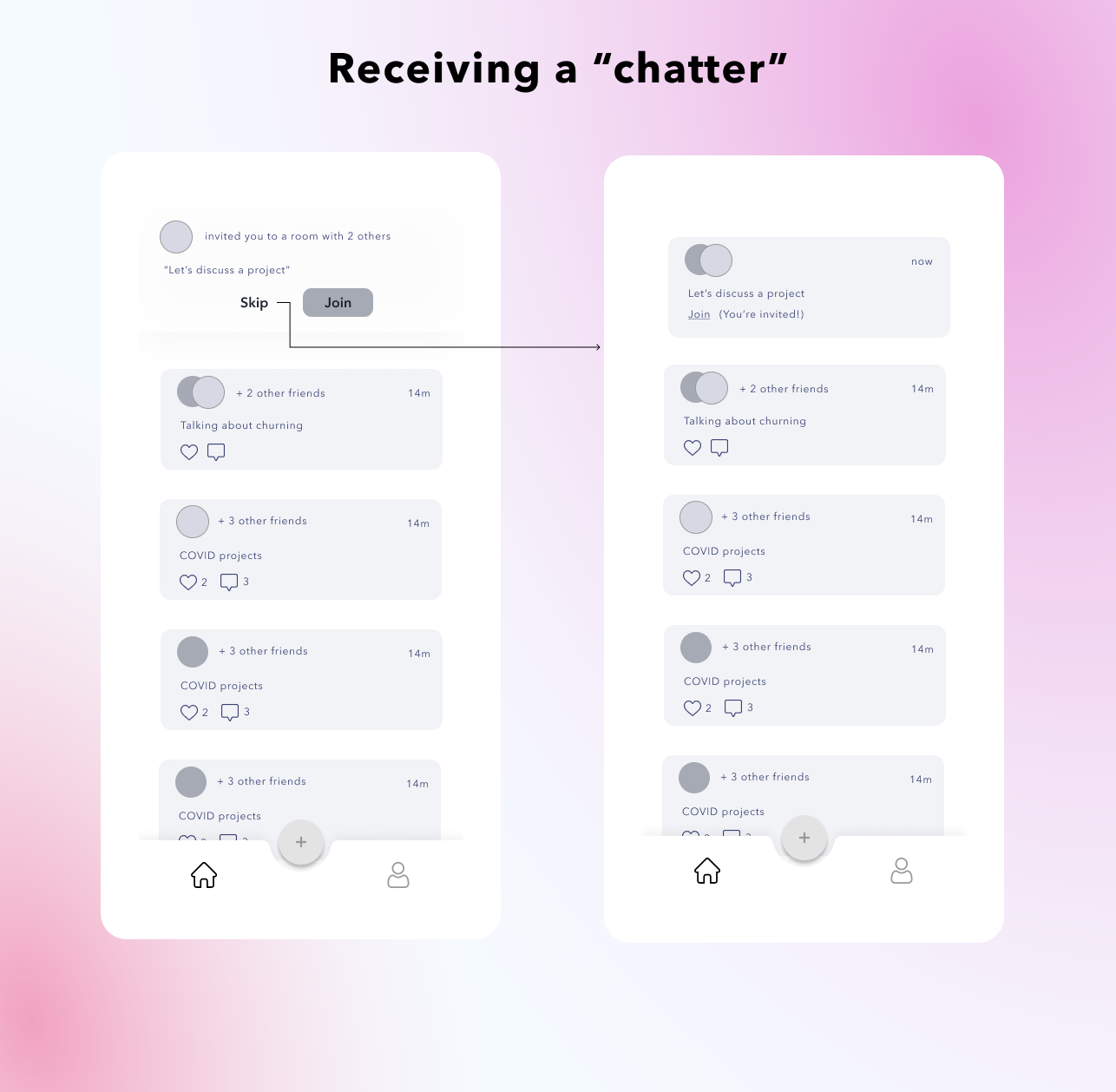
Receive a chatter: answer now, or decline
Call references: Glimpse and Houseparty
A MORE USEFUL SECOND WALKTHROUGH
In the second walkthrough, people could name specific occasions when they would use short calls. That was a more useful response than the journal had received, and supported continuing with this direction.
THE FINAL DESIGNPROTOTYPE, IN MOTION
01
Start a quick chat
Create a room, add a topic and a limit, invite friends.
02
Keep a log of memories
The call's description and participants go to your feed for friends to react to.
03
Join the conversation
Drop into a friend's live chatter from the feed.
WHAT I WOULD DEVELOP NEXT
I’d develop how rooms end when the caller-selected time runs out, then study how friends use short calls over time.
WHERE IT LANDED
I changed direction because the journal walkthrough challenged my first idea. Returning to the discovery notes helped me see what I had missed: making an update easier to write was different from removing the need to write it.